Text
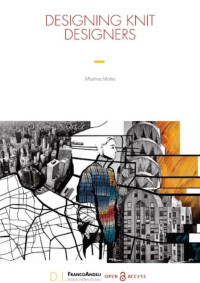
Designing Knit Designers
Knitwear design. A design discipline be-\\\\r\\\\ntween manual tradition and advanced tech-\\\\r\\\\nnology\\\\r\\\\n\\\\r\\\\nby Giovanni Maria Conti pag. 11\\\\r\\\\n1. Introduction » 15\\\\r\\\\n\\\\r\\\\n1. Knitwear design as a scientific discipline: a com-\\\\r\\\\nplexity to be addressed » 15\\\\r\\\\n\\\\r\\\\n2. Experimental actions to teach knitwear design: a\\\\r\\\\nresearch strategy towards innovation » 17\\\\r\\\\n2. Knitwear, really? » 20\\\\r\\\\n1. The academic discourse » 21\\\\r\\\\n1.1. Scientific research in design: the roots » 21\\\\r\\\\n1.2. The discussion about fashion design » 22\\\\r\\\\n1.3. A role for knitwear design among academic\\\\r\\\\nresearch » 24\\\\r\\\\n2. Knitwear as an Italian industrial reality » 26\\\\r\\\\n2.1. Introduction » 26\\\\r\\\\n2.2. Culture » 28\\\\r\\\\n2.3. Product-oriented creativity » 31\\\\r\\\\n2.4. Territory and knowledge » 35\\\\r\\\\n2.5. Small and specialized » 40\\\\r\\\\n2.6. Is Italian knitwear still strong? The issue of\\\\r\\\\ncompetitiveness for SMEs » 44\\\\r\\\\n\\\\r\\\\nCopyright © 2019 by FrancoAngeli s.r.l., Milano, Italy. ISBN 9788891797797\\\\r\\\\n\\\\r\\\\n6\\\\r\\\\n\\\\r\\\\n3. Design education and knowledge transfer pag. 48\\\\r\\\\n3.1. The root of design education: from art\\\\r\\\\nschools to integrated knowledge » 48\\\\r\\\\n3.1.1. The Italian context: from self-made\\\\r\\\\ndesigners to structured study paths » 53\\\\r\\\\n3.1.2. Between flexibility and specialisms:\\\\r\\\\nthe Italian industrial designer » 54\\\\r\\\\n\\\\r\\\\n3.1.3. University and companies: a long-de-\\\\r\\\\nbated relationship » 55\\\\r\\\\n\\\\r\\\\n3.2. From designers to fashion designers » 58\\\\r\\\\n3.2.1. The importance of the context » 58\\\\r\\\\n3.2.2. Fashion design education » 61\\\\r\\\\n3.2.3. A fashionable kind of complexity » 62\\\\r\\\\n\\\\r\\\\n3.2.4. Industrial fashion designers as cul-\\\\r\\\\ntural mediators in the collective crea-\\\\r\\\\ntivity system » 67\\\\r\\\\n\\\\r\\\\n3.2.5. Designerly ways of knowing fashion » 70\\\\r\\\\n4. Framing knitwear design » 72\\\\r\\\\n4.1. Introduction » 72\\\\r\\\\n4.2. A little explored research field » 73\\\\r\\\\n4.3. Framing the role of designers in the peculiar\\\\r\\\\ncomplexity of knitwear design process » 78\\\\r\\\\n4.3.1. Between garments and fabrics » 78\\\\r\\\\n4.3.2. Between creativity and technique » 79\\\\r\\\\n4.3.3. Between fashion and engineering » 80\\\\r\\\\n4.3.4. The issue of communication: tools for\\\\r\\\\nknitwear designers » 82\\\\r\\\\n\\\\r\\\\n4.3.5. Critical issues highlighted in the liter-\\\\r\\\\nature » 83\\\\r\\\\n\\\\r\\\\n4.3.6. The issue of innovation » 85\\\\r\\\\n4.4. Conclusion: what kind of perspective on\\\\r\\\\nknitwear design education? » 88\\\\r\\\\n\\\\r\\\\nCopyright © 2019 by FrancoAngeli s.r.l., Milano, Italy. ISBN 9788891797797\\\\r\\\\n\\\\r\\\\n7\\\\r\\\\n\\\\r\\\\n3. Crossing boundaries: from the knitwear\\\\r\\\\nindustry to design universities and return pag. 90\\\\r\\\\n1. Knitwear as an industrial system » 91\\\\r\\\\n1.1. Who needs a knitwear designer? » 91\\\\r\\\\n1.2. Knitwear design process: an overview » 92\\\\r\\\\n1.2.1. Colour and trend research » 92\\\\r\\\\n1.2.2. Yarns development and production » 93\\\\r\\\\n1.2.3. Yarns trade fairs » 96\\\\r\\\\n1.2.4. Research and creative design process » 98\\\\r\\\\n1.2.5. Design of the collection » 99\\\\r\\\\n1.2.6. Study of prototypes with design and\\\\r\\\\npattern amendments » 107\\\\r\\\\n1.2.7. Pre-production samples development,\\\\r\\\\nselling and consolidation of orders » 109\\\\r\\\\n1.2.8. Production and quality control » 110\\\\r\\\\n1.2.9. Distribution, press and PR » 111\\\\r\\\\n1.2.10.Conclusions » 113\\\\r\\\\n1.3. The needs of knitwear industry: interviews\\\\r\\\\nwith professionals » 114\\\\r\\\\n1.3.1. Critical issues as emergent needs » 115\\\\r\\\\n2. Knitwear as a design discipline » 136\\\\r\\\\n3. Conclusions » 141\\\\r\\\\n4. Knitwear design education: a teaching\\\\r\\\\nframework » 142\\\\r\\\\n1. A framework for knitwear design education » 143\\\\r\\\\n1.1. To give an overview on the existing situation » 145\\\\r\\\\n\\\\r\\\\n1.1.1. On knitwear history and contempo-\\\\r\\\\nrary scenarios » 145\\\\r\\\\n\\\\r\\\\n1.1.2. On materials » 146\\\\r\\\\n1.1.3. On material engineering » 146\\\\r\\\\n1.1.4. On management and supply chain » 146\\\\r\\\\n1.1.5. On the technical language of knitwear » 147\\\\r\\\\n1.2. To show the technological possibilities » 147\\\\r\\\\n1.2.1. Hand-knitting » 147\\\\r\\\\n\\\\r\\\\nCopyright © 2019 by FrancoAngeli s.r.l., Milano, Italy. ISBN 9788891797797\\\\r\\\\n\\\\r\\\\n8\\\\r\\\\n\\\\r\\\\n1.2.2. Machine-knitting pag. 148\\\\r\\\\n1.2.3. Shaping » 148\\\\r\\\\n1.2.4. Finishes » 149\\\\r\\\\n1.2.5. Programming industrial machines » 149\\\\r\\\\n1.2.6. Visits to companies and fairs » 149\\\\r\\\\n1.3. To structure the design process » 150\\\\r\\\\n1.3.1. Launch of the brief » 150\\\\r\\\\n1.3.2. Market research, brand positioning,\\\\r\\\\ntarget profiling » 151\\\\r\\\\n1.3.3. Mood and concept » 151\\\\r\\\\n\\\\r\\\\n1.3.4. Sketches and collection architecture; re-\\\\r\\\\nsearch on yarns, textures and colours;\\\\r\\\\n\\\\r\\\\nstitches and structures development » 151\\\\r\\\\n1.3.5. Prototyping » 152\\\\r\\\\n1.3.6. Final presentation » 152\\\\r\\\\n2. Framework application » 153\\\\r\\\\n3. Findings » 161\\\\r\\\\n3.1. Verify the design framework » 161\\\\r\\\\n3.2. Verify the impact of each module on the others » 161\\\\r\\\\n3.3. Modelling the activities on times, contexts\\\\r\\\\nand participant’s target » 163\\\\r\\\\n\\\\r\\\\n3.4. Experiment the added value of the involve-\\\\r\\\\nment of a company in the teaching/learning\\\\r\\\\n\\\\r\\\\nexperience » 163\\\\r\\\\n\\\\r\\\\n5. University meets the industry: experi-\\\\r\\\\nmental actions » 167\\\\r\\\\n\\\\r\\\\n1. Further perspectives on collaborative teaching in\\\\r\\\\nknitwear design » 168\\\\r\\\\n2. Pilot actions » 170\\\\r\\\\n2.1. Workshop with Ghioldi » 171\\\\r\\\\n2.2. Workshop with Filoscozia » 178\\\\r\\\\n2.3. DDM with MF1 » 184\\\\r\\\\n2.4. BA Thesis development with Ghioldi » 195\\\\r\\\\n3. Findings » 204\\\\r\\\\n\\\\r\\\\nCopyright © 2019 by FrancoAngeli s.r.l., Milano, Italy. ISBN 9788891797797\\\\r\\\\n\\\\r\\\\n9\\\\r\\\\n\\\\r\\\\n6. Results and further considerations pag. 212\\\\r\\\\n1. Final outcomes and main results » 212\\\\r\\\\n2. Complemented application of the outcomes in an\\\\r\\\\nintegrated teaching strategy » 216\\\\r\\\\n3. Findings and hypotheses of scalability » 216\\\\r\\\\n4. Conclusions » 219\\\\r\\\\nBibliography » 221
Availability
Detail Information
- Series Title
-
-
- Call Number
-
746.432 Mar d
- Publisher
- Milano : FrancoAngeli., 2019
- Collation
-
ix, 235 hlm. : 23 x 14 cm
- Language
-
English
- ISBN/ISSN
-
978-8-891-7977-9-7
- Classification
-
746.432
- Content Type
-
-
- Media Type
-
-
- Carrier Type
-
-
- Edition
-
-
- Subject(s)
- Specific Detail Info
-
-
- Statement of Responsibility
-
-
Other version/related
No other version available
File Attachment
Comments
You must be logged in to post a comment
 Computer Science, Information & General Works
 Philosophy & Psychology
 Religion
 Social Sciences
 Language
 Pure Science
 Applied Sciences
 Art & Recreation
 Literature
 History & Geography